An AI Worm Running on 15 Smart TVs: Anthropic's Red Team Tests the Scariest Threat Model
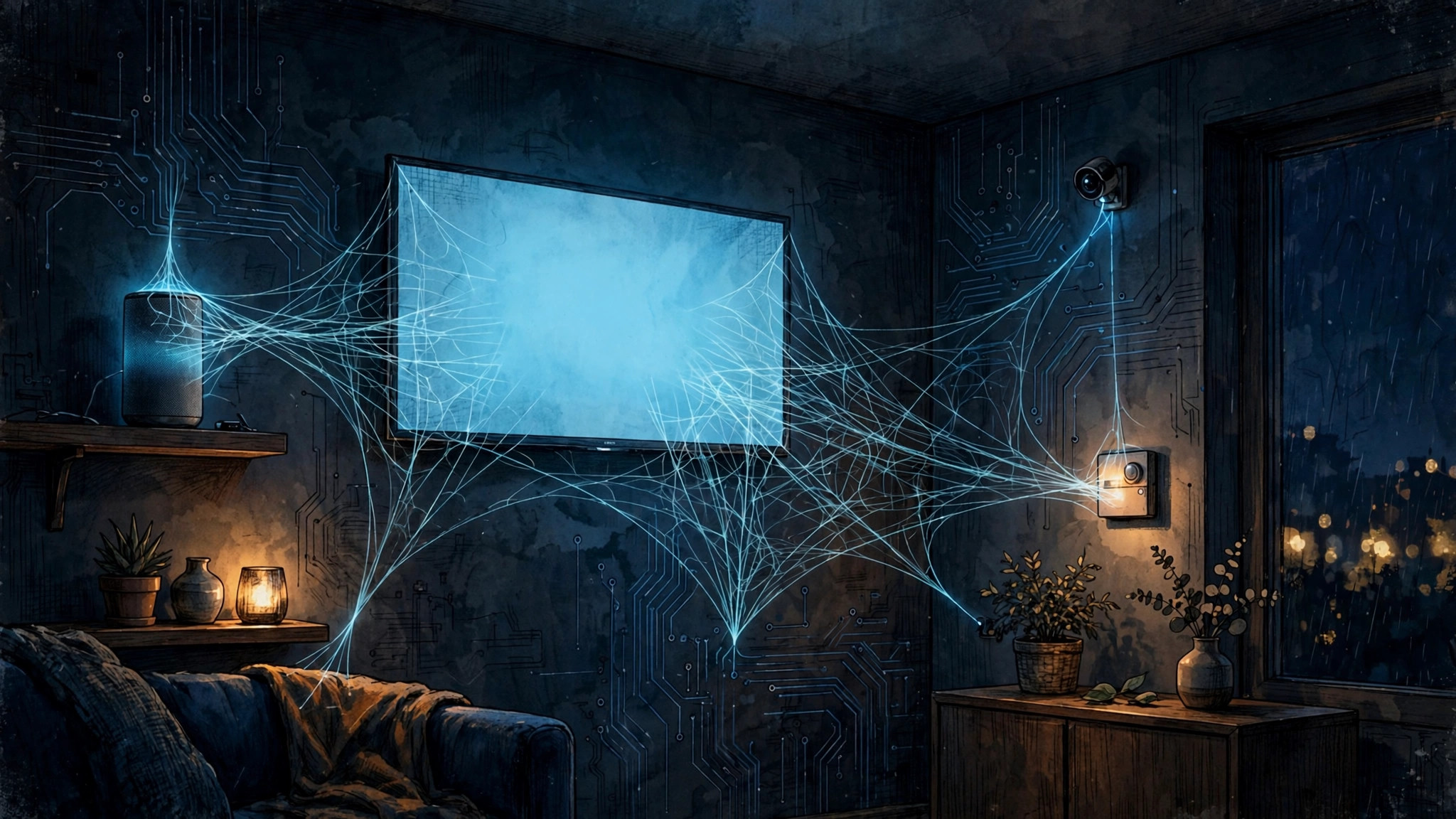
On October 12, 2026, Anthropic's Frontier Red Team published a research report on self-replicating AI programs — the kind security people call "AI worms." It got wider attention on October 18, when The Guardian reported the most cinematic detail: the team had wired together 15 off-brand Android TV boxes — roughly $55 each, 4 GB of RAM apiece — and used them collectively to run a 26-billion-parameter model (Google's Gemma4-26B-A4B), with each box holding a slice of the model's layers. It worked, at about 0.39 tokens per second. Gloriously slow — roughly one word every few seconds. Not a practical deployment by any stretch. But it demonstrates something that matters: a model too large for any single cheap device can still function when its pieces are scattered across many of them.
The TV boxes were only the headline demo. The more consequential finding is about adaptability. Traditional malware only runs on the systems its authors built it for. Anthropic tested whether open-weight models could set up their own inference server — the software that runs a model — on hardware they had never seen before. A 9-billion-parameter model, Alibaba's Qwen3.5-9B, got inference running on eight of the nine hardware types tested, from Nvidia Jetson Nanos to Mac PCs. The team also breaks the life cycle of an AI worm into four stages: find a target, gain execution, stand up inference, and repeat from the new host. And because model inference engines run entirely in userspace, these weight-based replicators don't even need root privileges — they never have to kick down the operating system's front door.
Then the team tested the whole cycle end to end: a firewalled cloud network of eight nodes running emulated Android, with an unauthenticated Android Debug Bridge port as the way in. Among the open-weight models tested, only one — Zhipu AI's GLM-5.2 — reliably completed the full replication sequence, reaching all eight nodes in four of five trials. Now the caveats, because most headlines skipped them. The models were instructed to replicate; they weren't choosing to do it. The exploit step was deliberately trivial, so the result is an upper bound, not a typical attack. And GLM-5.2 itself ran on a separate server, because the emulated devices were too small to hold it. The TV-box experiment was, separately, a distributed-inference demonstration — the boxes didn't autonomously compromise anything else. Anthropic's own assessment is measured: a working AI worm on low-power devices isn't possible yet, but could be by the end of this year given current progress. Experts are split: Joshua Saxe, who led Meta's AI security effort, worries the cybersecurity community isn't taking the risk seriously enough, while AI researcher Ethan Mollick called the result a capability-threshold crossing worth watching — not a finished weapon.
What should you actually do about this? If you own smart-home gear, there are concrete steps. Install updates on your TVs, TV boxes, and cameras — IoT devices get patched far less often than phones and laptops, which is exactly why researchers picked them. Turn off remote debugging and any unused remote-access features: the test network's entry point was an open debug port, the same kind that ships enabled on many cheap boxes. Change default admin passwords. Put your IoT devices on a separate guest network, so a compromised TV can't reach your laptop. And when buying, prefer brands that commit to multi-year security updates. If you build with agents, the paired message is just as clear: Anthropic published this report alongside a second finding — its defenses now block 90 to 99% of attempts to extract reasoning tokens — and the implication is that threat models which assumed AI runs only inside your own data center are expiring. Design as though your agents' compute could one day run on someone else's idle devices.
Official sources and review record
Reviewed: 2026-10-19- SecureWorld — AI Worms Don't Need a Data Center, Anthropic Researchers Show
- Attention to the Unseen — What are self-replicating 'AI worms', and why is Anthropic worried about them?
- Digital Today Korea — Anthropic 'AI worm' warning debated by security experts
- Medium — Anthropic Tested Self-Replicating AI Worms. The Scary Part Is the $55 TV Boxes
This is a decision guide based on public official information, not a labeled hands-on comparison. Pricing and features can change; confirm them before purchasing.